No "Soul"? The Euphoria That Built Hannah Arendt's Philosophy of the Mind
What Hannah Arendt Can Teach Us Now: A Draw to Judgment Series
“Thoughtless.”
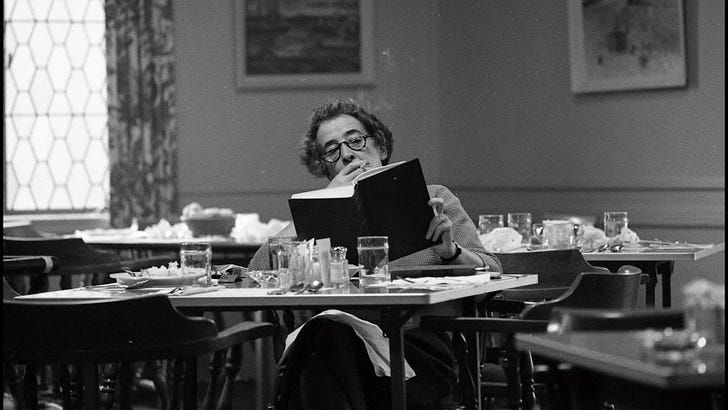
This is how Hannah Arendt described Adolf Eichmann on the witness stand in Jerusalem. Someone who couldn’t produce a meaningful utterance, let alone string two coherent thoughts together. Even before impersonal bureaucratic structures cause harm, she argues, there is first the individual who is unwilling to think through the consequences of his actions. Evil doesn’t have to originate in intention. On the contrary, the lack of thought may very well be the origin of malicious intent in the first place.
In my previous essay, “Who Gets to Govern?” I began to explore Hannah Arendt’s last work, The Life of the Mind,1 a work that had its roots in 18th century concerns about whether human beings can truly govern themselves. The book had its conceptual beginnings in her first-hand account of the Eichmann trial in Jerusalem in 1961, Eichmann in Jerusalem: The Banality of Evil.2 In the early 1960s, she presented the observation that Eichmann was “thoughtless,” not diabolical. This was a major revelation for herself and a surprising, even jarring proposal for her readers—one that left her in a maelstrom of professional and personal criticism and shaming for about five years afterwards.3
The publication of Eichmann in Jerusalem provoked exceptionally strong reactions because it did not provide a Hollywood portrayal of a mass murderer. Her good friend and Kabbalist scholar Gershon Scholem accused her of a lack of “Ahavath Yisrael,” love of the Jewish people. Others expressed similar recriminations in public media and privately.4 The Jewish woman arrested by the Gestapo in 1933, then exiled in France, only to be sent to the concentration camp Gurs under the Vichy regime, now found her external and internal worlds collapsing. Instead of public recognition of her paradigm shift in the understanding of good and evil, she herself was put on trial. Two years later, in a letter she sent to her best friend Mary McCarthy, she made a statement that indicates, sadly, internalizing of the accusations: “You are the only reader to understand that I wrote this book in a curious euphoria. And that ever since I did it I feel—after twenty years [of the downfall of National Socialism]—light-hearted about the whole matter. Don’t tell anybody: is it not proof positive that I have no ‘soul’?”5
Indeed, the early 1960s were an extremely vulnerable moment in her life. In addition to managing the 1961 Eichmann trial and its aftermath, Arendt barely survived a truck hitting her taxi in 1962 while traveling crosstown through New York City’s Central Park. In 1961, her husband, Heinrich Blücher, was hospitalized for an aneurysm, and his health continued to fail. I will discuss this moment in her life much more in a later essay. Suffice it to say for now that this “curious euphoria” is widely recognized today as a trauma response, and this response is important for understanding why she transitioned from political theory to metaphysics, something frowned upon at the time within the profession—or even considered obsolete.
Hurt and anguish, according to the last 30 years of affective neuroscience research, are the emotional interpretation of specific kinds of physical pain—hence Bessel van der Kolk’s book title The Body Keeps the Score.6 Arendt’s euphoria—a form of dissociation that masked the pain of coming face-to-face with Eichmann—was followed by internalized overwhelm in response to attacks from her inner circle. The enormous about-face in professional direction that resulted represented far more than a professional strategy. The work also acted as a form of self-protection.
How might a professional philosopher, in particular, manage unwitnessed inner pain? Arendt made some very interesting observations, perhaps self-reflexively, early on in The Life of the Mind:
For philosophers, Arendt remarks, the fascination with death is intimately connected with living out their lives in the world of thought, not action. It is not surprising, therefore, that this particular philosopher managed her pain and trauma by creating even more distance between mind and body. Heavy thought and detachment served to escape pain, but it also attempted to facilitate new security protocols for the future. Until her death at the end of 1975, Arendt devoted herself to creating a formal philosophical exegesis on the nature of “thought” and “thoughtlessness”—a new metaphysics.
It was thought generating new thought in response to the threat of personal decomposition.
Listen to a preliminary lecture Arendt gave at Loyola University Chicago in 1970, later refined into The Life of the Mind.
In the first section of the Life of the Mind, “Thinking,” she distinguishes between “cognition” and “thought.” “Cognition” is the mental activity we use to process information toward a predetermined end. It allows us to anticipate the many ways that a problem can resolve into multiple, predictable outcomes. Thinking, on the other hand, is an open-ended process seeking truth. There is no predictable outcome here. It is simply a way of bringing something abstract into being. In her second section, “Willing,” she takes apart how the human mind rationalizes or fabricates to bring about an end. The will can operate to achieve an imagined ideal quite independent from thinking, although not necessarily. However, these baseline differences in function, according to Arendt, are not enough to define “thinking” and “willing.” The different aspects of the mind are ontologically the unfolding of temporal presence or absence.
To illustrate time’s relationship to thinking, Arendt borrows the medieval theological concept of Nunc stans, literally “standing now.” It connotes an eternal, unchanging present outside of linear time. Here is the graphic Arendt uses in The Life of the Mind to illustrate this lack of temporality:
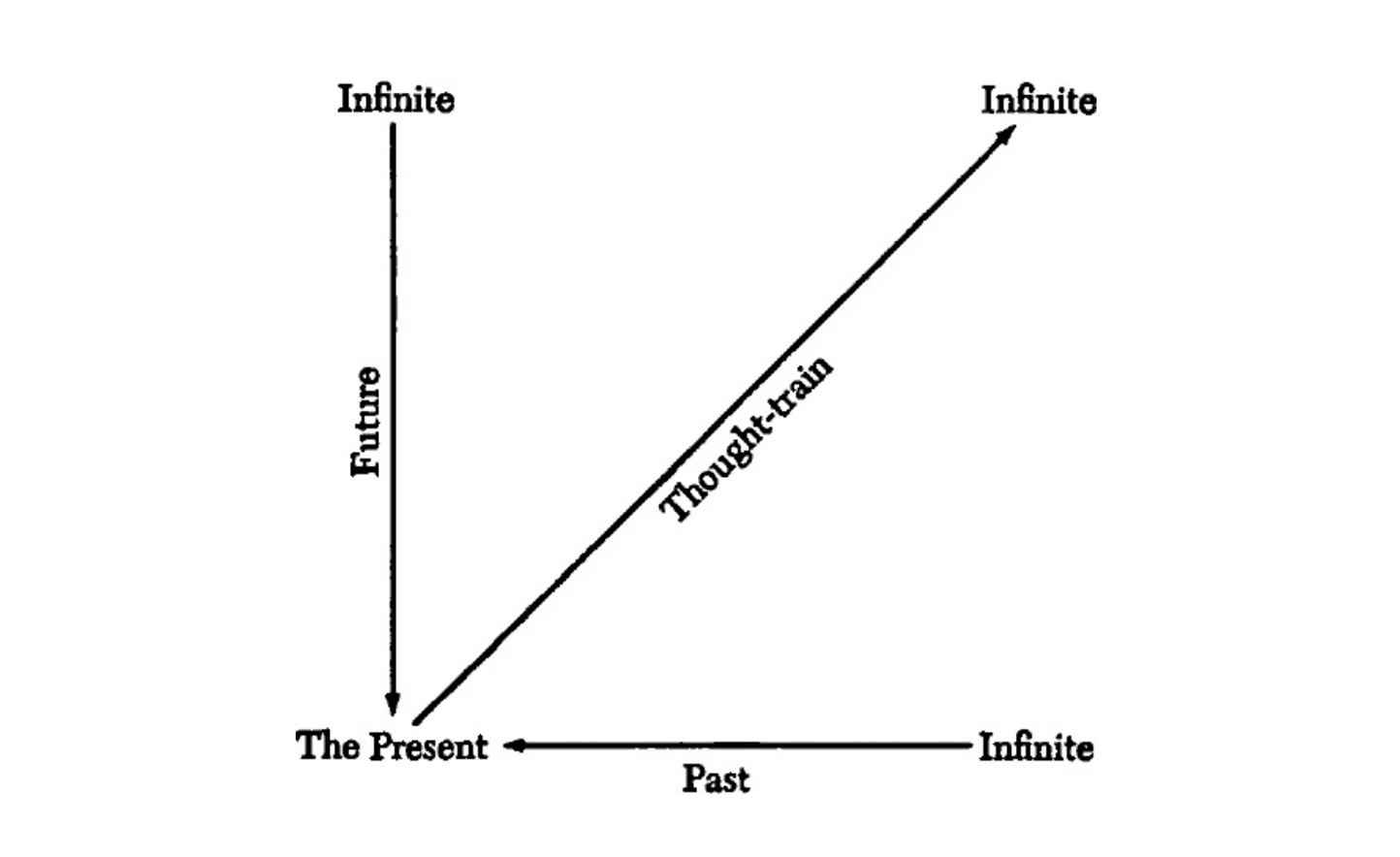
Two separate time vectors, Past and the Future, meet in the lower, left-hand corner at the point of Present. The diagonal represents the thinking process (“Thought-train”) that stands outside of time. In classical Newtonian physics—something she would have studied to some extent at the university during the 1920s—time is external to the matter of thought. Now, let’s consider “cognition” and “will.” Both have ends, and ends require a vector, which in turn implies time, in contrast to thinking occurring outside of time. “Cognition” confirms. “Will” plans.
Before I continue relating temporality to the mind, I want to make some comments about the use of the word “vector.” In this context, I am using a math and physics concept metaphorically—here as a “desire with a destination” or an “arrow attached to intention.” This is no accident on either my part or Arendt’s. Writers often grab vocabulary from fields that have great legitimacy and resonance with their reading public. For highly abstract work in the humanities, modern science provides one way to bridge the gap between what an audience expects and new ways of thinking—any abstract innovation can otherwise be incomprehensible to the public without some sort of familiar reference point. Simple computer science idioms, for example, are borrowed these days to describe a mental state. If we’re alert and ready or if we’re available to the public, we say we are “online.” If it’s the opposite, we say we’re “offline.” The metaphor connects our state to a culturally constructed baseline of truth. A belief in the veracity of science is a key element of Western civilization since the Renaissance.
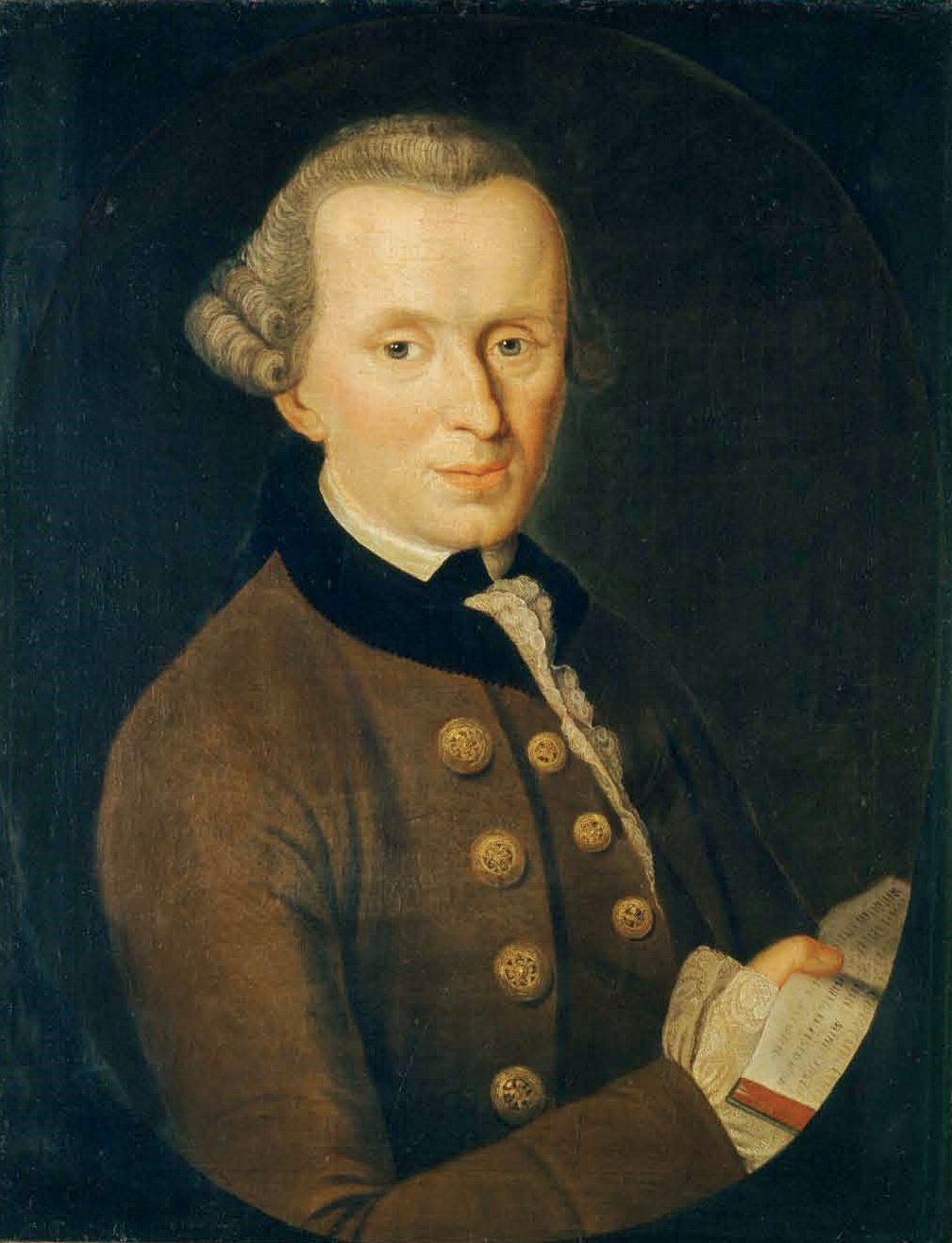
Arendt’s use of scientific analogies made her new thinking easier to conceptualize in relationship to the material world. She wasn’t the first. Her most important philosophical influence for this metaphysical project, Immanuel Kant, did likewise in the late 18th century. His three volumes, Critique of Pure Reason, Critique of Practical Reason, and Critique of Judgment, especially borrowed from Copernicus—someone very familiar to his contemporaries. Kant used “time” and “space” to illustrate the thinking process, positing different “rooms” for different processes of the mind. Arendt, two centuries later, also used the language of Newtonian physics to illustrate difficult metaphysical concepts, but she visualized time and space differently. The mind of Arendt is not an array of “rooms,” but rather is a time-space relationship poetically fusing classical physics with a popularized understanding of Einstein’s theory of General Relativity. For the reader, the intersection of the materialist nature of the hard sciences with the humanities provides both a visualization and a sense of security in what is already familiar.
So far, my presentation of The Life of the Mind has been highly abstract—this was a work of professional, not popular philosophy. Next time, I will make these difficult time-space concepts in philosophy and physics more concrete. Common English-language idioms reveal by their very construction the ontological relationship of time to the mind.
Hannah Arendt, The Life of the Mind (New York: Harcourt Brace Jovanovich, 1978). ↩
Hannah Arendt, Eichmann in Jerusalem: A Report on the Banality of Evil (New York: Viking Press, 1963). ↩
Elizabeth Young-Bruehl, Hannah Arendt: For Love of the World (New Haven: Yale University Press, 1982), 330–331. ↩
Philip Weiss, “Hannah Arendt on Self-Love and -Hatred,” Mondoweiss, May 1, 2007, https://bit.ly/4lmix7Y, accessed March 12, 2026. ↩
Young-Bruehl, 337. ↩
Bessel van der Kolk, The Body Keeps the Score: Brain, Mind, and Body in the Healing of Trauma (New York: Viking, 2014); Antonio Damasio, Descartes' Error: Emotion, Reason, and the Human Brain (New York: Putnam, 1994); J Panksepp, “Affective Neuroscience of the Emotional BrainMind: Evolutionary perspectives and Implications for Understanding Depression,” Dialogues in Clinical Neuroscience 12, no. 4 (2010): 533–545; Meghan L. Meyer, Kipling D. Williams, and Naomi I. Eisenberger, "Why Social Pain Can Live On: Different Neural Mechanisms Are Associated with Reliving Social and Physical Pain," PLOS One 10, no. 6 (2015): e0128294. ↩
Hannah Arendt, Thinking (New York: Harcourt Brace Jovanovich, 1977) 84-85. ↩