The Banality of the Algorithm—or Why "I'm Coming" Is the Essence of a Research Question, Not a Programming Matter
What Hannah Arendt Can Teach Us Now: A Draw to Judgment Series
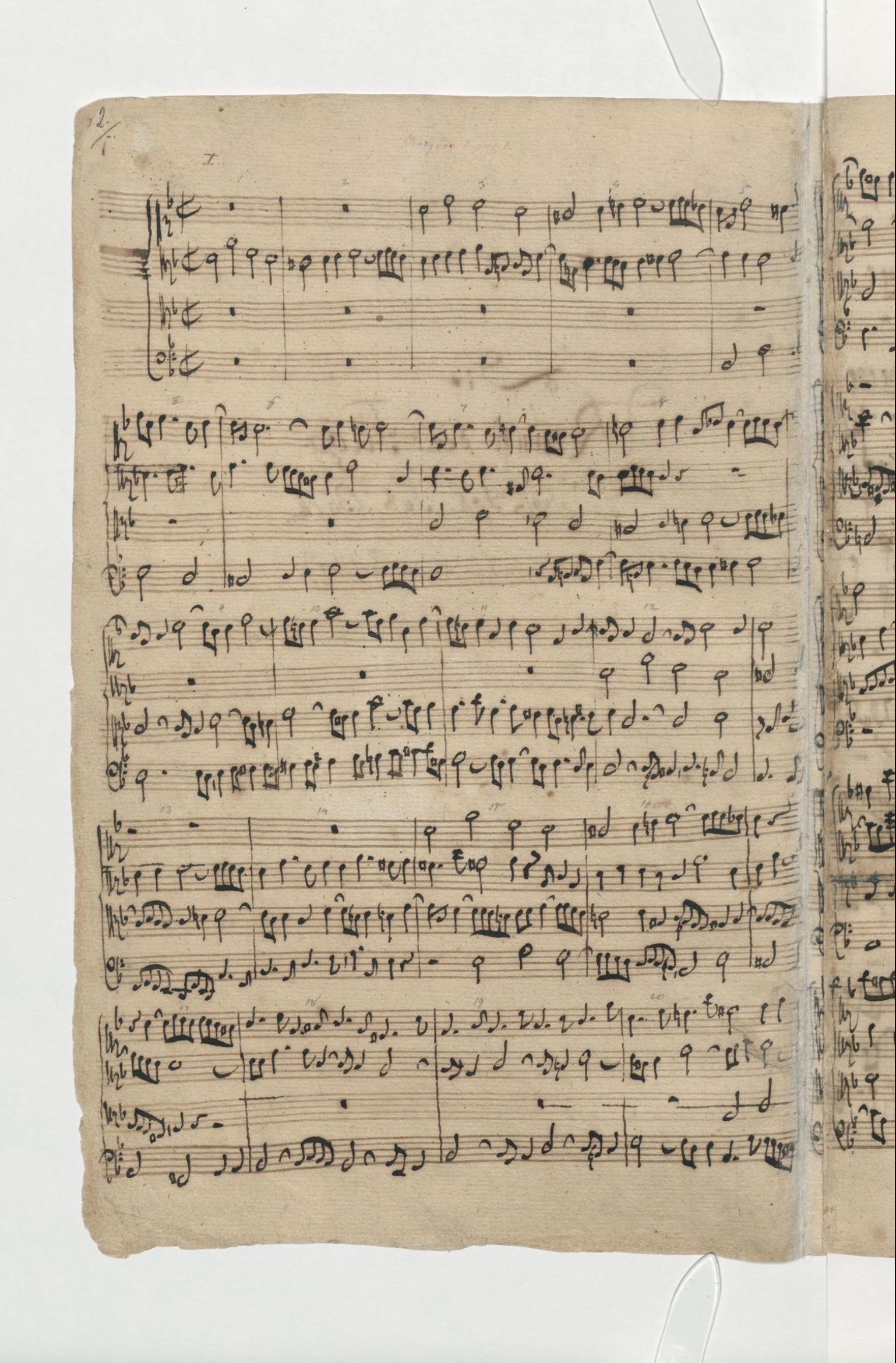
Before beginning this essay, click play. Consider what the music is trying to convey as you read. I’ll explain why I chose it towards the end.
A couple of weeks ago, I saw the new documentary, The AI Doc. It was both better and worse than I expected. Better in the sense that the directors, Daniel Roher and Charlie Tyrell, were critical of the level of intelligence of AI technology and the wild and grandiose claims made about it. It was worse in that the claims about AI’s ability to either destroy or elevate the human race were simultaneously distopian and utopian. A little background in the history of science would have done the industry some good, as every new technology, method or process has always been accompanied by fears that are rarely realized. But then, on the other hand, poor or nonexistent humanities instruction in the United States and perhaps elsewhere likely precludes good thinking about what a new technology could bring.
In fact, the creators of AI, based on what I saw in the film, seem to be wholly ignorant about their epistemological product—or better put, the epistemologies of their products. They are brilliant in certain ways, producing Large Language Models that provide outputs that are useful across fields and skills. I have used AI to speed up research, create images, analyze music, find a good restaurant and vacation spot, and locate the ultimate orange cat video. As a professional researcher for over 30 years, however, I also recognize AI’s serious limitations. Human judgment simply can’t be programmed as mathematics and code can’t produce critical thinking—they only help us navigate relationship systems. True judgment requires senses and emotion. Based on what I saw in the film, Sam Altman, Mark Zuckerberg, Dario Amodei, Demis Hassabis, and Elon Musk don’t seem to know this.
It was telling that when it was time for the audience to see and hear what these entrepreneurs had to say in an interview with the filmmakers, Zuckerberg and Musk declined. Those who did show up, Altman, Amodei, and Hassabis, had great difficulty speaking extemporaneously. They hemmed and hawed, exhibited nervous tics, and overall did not present confidence in themselves, let alone the technologies they are selling to millions. In fact, they predicted the obsolescence of homo sapiens in a decidedly christological, apocalyptic way. Kurzgesagt, they had unresolved trauma written all over their faces.
Are these the people we want deciding what we know or don’t know or how to approach a problem? I don’t think so.
In my last essay, “Authoritarianism Begins with Thoughtlessness”, I wrote about how time is intimately related to thought: “thinking” is a timeless present, “cognition” hesitates to move into the future, and “willing” can bypass the present and the past altogether, leaving amoral action. I also gave examples of how we collapse time in figures of speech—”getting lost in thought,” for example, or “wishing your life away.” I will soon be completing the next essay that connects time and thought in the visual arts—leading eventually to finishing the “Judging” section of Hannah Arendt’s The Life of the Mind. For today, however, I want to explore in more detail how we can collapse time when we give voice to thinking and knowledge.
I was conducting preliminary AI research last week on a music theory and history question: There seems to be a lot of talk about the Jewishness of Johann Sebastian Bach’s music. Is there any truth to this? I’m a trained classical musician, as well as a Jewish writer, so the question piqued my interest.
While researching, I noticed a very interesting trend. In search results over and over again —so much so that it couldn’t be ignored—Bach’s use of Gematria, that is, Jewish numerology, was mentioned. So I asked Claude, “JS Bach apparently was aware of gematria. Is this true?” Claude’s answer:
Yes, almost certainly. Bach was obviously familiar with gematria, as evidenced by his frequent references to 14 (2x7) and its inverse, 41 … That said, the extent of his use is debated. While many claims of Bach as a ‘Cabalistic’ gematrist are considered far-fetched, there is no doubt that Bach was well aware of some gematric schemes applied to [fix quote] and was greatly sensitive to the mathematics of music and numerical relationships in general.
Were you, the reader, struck at the adjective “far-fetched” in Claude’s answer? I was. And note the high confidence: “Bach was obviously familiar with gematria.” These are exceptionally strong terms for a preliminary research output. Even more disturbing, Kabbalistic numerology is always Gematria and Gematria is the basis for Kabbalistic numerology, so why the “schism” in the answer? There are brazen contradictions and overstatements here.
But there’s even more wrong with Claude’s answer! Bach incorporated the very obvious Gematria numbers 14 and its inverse 41 into his compositions. He also incorporated his name, which in Hebrew letters, adds up to 14 (יוהאן סבסטיאן באך). These numerical associations are not possible within the Latin alphabet. In other words, Bach not only directly incorporated Gematria into his compositions, but he also needed some reading knowledge of Hebrew in order to do so.1
How many of you now are catching the enormous gulf between Claude’s heightened rhetoric and its poor but confident-sounding conclusions? There is an implication in Claude’s answer that practicing Christians by virtue of their faith would 1) neither engage with Kaballah nor incorporate it into their work and 2) would also be unlikely to engage fully with Old Testament theology and methods. This second implication, it needs to be emphasized, is simply not correct. Bach marked up Chronicles, especially the role of musicians in Temple worship.2
Why might Claude get this so wrong in spite of the overwhelming evidence it presents? We need to consider that a computer can’t sense or feel opinion. It can only calculate probability and statistics, so it is programmed to use the opinion most often expressed.3 So here’s another conclusion that we can draw from Claude’s poor output: There is anti-Jewish bias inherent the analyses Claude accessed. To be Christian in Claude’s printout, means not only avoiding engagement with different theologies and practices, but also denying things that might pollute a pure Christian identity—whatever that is. (I should note here that this pseudo-scholarship also ignores the popularity of Hebraic studies at Leipzig University in the early 18th century.4)
And that’s not all—there’s more! Claude’s answer, and by extension, the so-called academic research it accesses, is ahistorical. It ignores the entire 18th-century historical context of cross-cultural exchange and collaboration in Leipzig. Much like major metropolises today such as London, New York, Bangkok, Mumbai, and Tokyo, Leipzig was at the center of major trade routes. The city also hosted large fairs three times a year that brought merchants from as far away as Asia Minor, as well as European Jewish merchants. The city itself also had Jewish residents from the early 18th century forward. And it should be added that the inability of Claude to use or apply this context, excludes an understanding of how large metropolises operate. These kinds of settlements usually present a high activity of underground activity, such as homosexual relationships, that rarely reflects the laws of the land. While homosexuality has been historically persecuted, it is found in places where complexity makes possible some level of public anonymity, even allowing for heterosexual experimentation (“bi-curiousity”). Likewise, Jews were subject to all sorts of legal restrictions, but that doesn’t necessarily mean they didn’t participate partially or even fully in Leipzig’s culture.5 Claude’s assumptions don’t take any of these possibilities into account.
In a context like this, Bach’s positions of employment and outward Lutheran faith really only provide partial biographical detail. Indeed, what we know about his private life communicates far more than his profession and upbringing. He was fluent in German, French, Italian, Latin, and perhaps even English, although he never traveled outside of the Holy Roman Empire.6 His compositions drew from the international music scene, composed in English, French, and Italian styles. He was certainly “fashion forward” in some of his social positions, featuring the female voice over and over again in his sacred compositions at a time when the Lutheran Church was debating its appropriateness. He likewise pushed the boundaries of solemn Lutheran service at the time to encompass the theatrical. In one of his most famous cantatas, an early form of musical theater in secular and religious contexts, he portrays the consummation of the marriage between Christ and his congregations in highly sensual terms. This is the duet you have been listening to while reading this essay.
Now here’s a video recording with subtitles so that you can connect the music to the text. Readers need to understand when they hear the aria “Wenn Kömmst Du?” it literally means “when are you coming?”—with the exact same orgasmic connotations.
(Note that this video is staged as a concert performance. An actual service at the Thomaskirche would have included much more congregational participation, and the musicians would have spread around the church.7)
Yes, readers, you are allowed to laugh. To be honest, I myself really wanted to know what Bach was thinking before the first performance. Maybe he was nervous about the congregation’s response. Or perhaps he exclaimed to himself in early 18th century Thuringian dialect, “Wait ’till they get a load of this!”
Yes, it is unlikely that historical evidence will surface that answers this particular question. But getting that answer is besides the point. What is important is that we be allowed to ask and answer these sorts of questions with full access to available research and without prejudice. We shouldn’t be precluded from imagining cross-cultural and cross-faith exchange, and we certainly shouldn’t have difficulty finding a recording of “Wachet Auf” on Apple music using its standardized index number (BVW 140) because the platform is trying to protect its listeners from sexualized content. Why place a “Faraday cage” around the research process or for that matter a celebrated musical composition?

Claude AI, disappointingly, does exactly that. It promotes the “willing” of an ahistorical interpretation for the sake of a perfect, untainted self-identity—one that cannot ever exist in the present, past or future. This epistemological black hole, where information is chopped up and fragmented into almost nothing for the sake of false coherence, is precisely what Hannah Arendt warned against. Does this sound like the “banality of evil” to you?
“Tanach and Gematria Search Tool,” Ohr Chadash, https://thetrugmans.com/gematria/; Ruth Tatlow, Bach and the Riddle of the Number Alphabet (Cambridge: Cambridge University Press, 1991) ↩
Howard Cox, "The Scholarly Detective: Investigating Bach's Personal Bible," Bach 25, no. 1 (1994): 28–45, http://www.jstor.org/stable/41640389. ↩
Dillion, Danica, et al., “Large Language Models Do Not Simulate Human Psychology,” arXiv preprint arXiv:2508.06950 (2025), https://arxiv.org/html/2508.06950v3. ↩
Encyclopaedia Judaica, 2nd ed. (Detroit: Macmillan Reference, 2007), s.v. "Abicht, Johann Georg." ↩
“Visitors at the Leipzig Trade Fair as a Genealogical Source,” Avotaynu Online, May 28, 2020, https://avotaynuonline.com/2020/05/leipzig-trade-fair/; “Leipzig,” Encyclopaedia Judaica, 2nd ed., Encyclopedia.com, https://www.encyclopedia.com/places/germany-scandinavia-and-central-europe/german-political-geography/leipzig; “History of the Jews in Leipzig,” Wikipedia, https://en.wikipedia.org/wiki/History_of_the_Jews_in_Leipzig; Robert Aldrich, “Homosexuality and the City: An Historical Overview,” Urban Studies 41, no. 9 (August 2004): 1719–1737, https://www.jstor.org/stable/43201476; David Higgs, ed., Queer Sites: Gay Urban Histories Since 1600 (New York: Routledge, 1997). ↩
The Holy Roman Empire was declared in the year 800 by Charlemagne and was not dissolved until 1806 during the Napoleonic wars. Regarding Bach’s fluency in languages other than German, see Christoph Wolff, Johann Sebastian Bach: The Learned Musician (New York: W. W. Norton, 2013). ↩
Braxton Boren, Brandie Lane, and Daniel Merceruio, “Acoustic Simulation of Bach’s Performing Forces in the Thomaskirche,” Acta Acustica 5 (2021), https://acta-acustica.edpsciences.org/articles/aacus/full_html/2021/01/aacus200072/aacus200072.html. ↩