A German Election Debate with American Implications
Finding Patterns in Today’s US Politics
What You Need to Know:
- The Bundestag elections are being held on Sunday, February 23, 2025. A debate was held on Sunday, February 16.
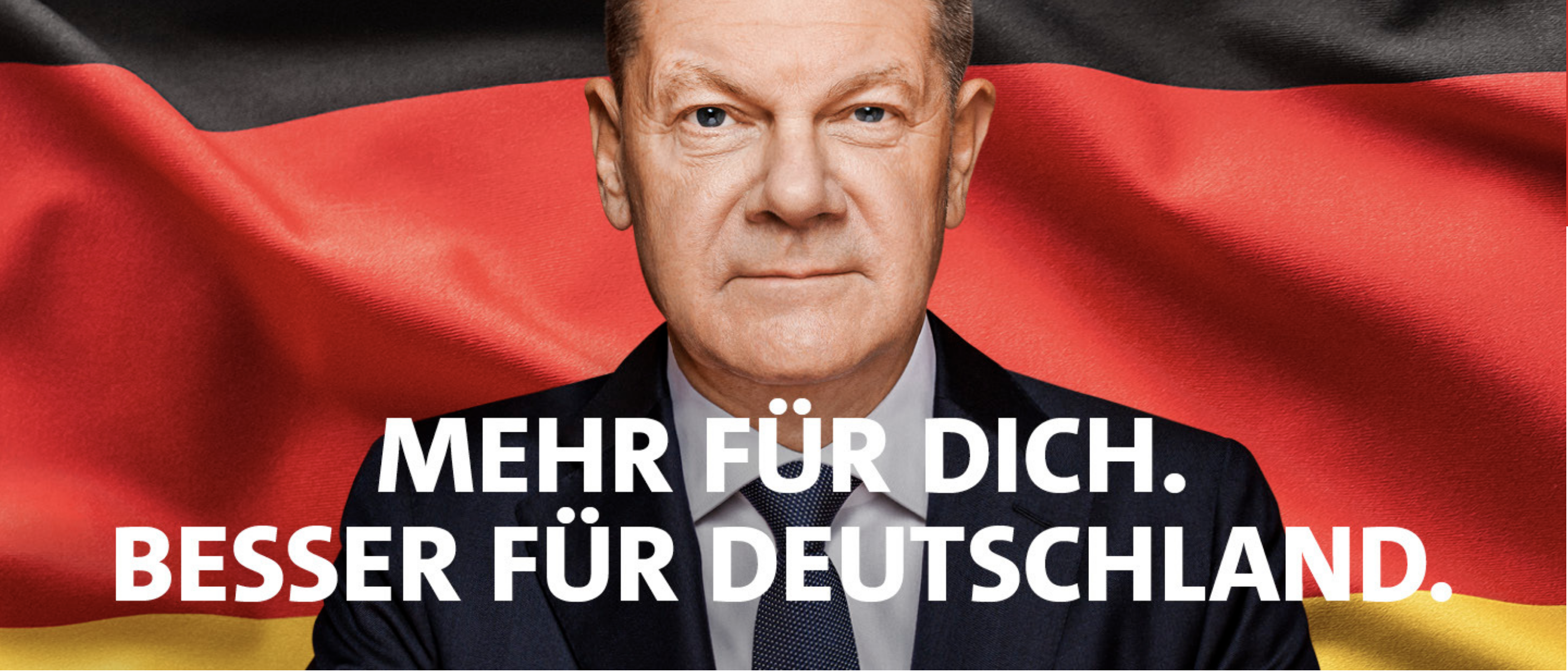
- It was the old guard parties — the Christian Democrats (CDU), the Social Democrats (SPD), and the Greens — vs. the neo-fascist Alternative für Deutschland (AfD). The current Chancellor, Olaf Scholz, and his party, the Social Democrats are currently third in the polls, while Friedrich Merz leads the frontrunner Christian Democrats (CDU) and Robert Habeck the fourth-place Greens. Alice Weidel for Alternative für Deutschland is in second place.
- German concerns are similar to those raised last November in the US: the economy, migration, and loss of trust in the ruling elite.
- After J.D. Vance cornered the SPD and the Greens at the Munich Security Conference, the CDU, SPD, and Green parties strongly lined up against the AfD at the debate.
- The AfD is leading the polls in the geographic area that was once the German Democratic Republic, indicating that strong economic and cultural divisions between East and West remain thirty years after unification.
- A refusal to form a coalition with the AfD would exclude about 20% of the vote from governance, according to the polls.
- Will the new German government be able to regain trust among German voters leaning toward the far-right?
In-Depth Analysis:
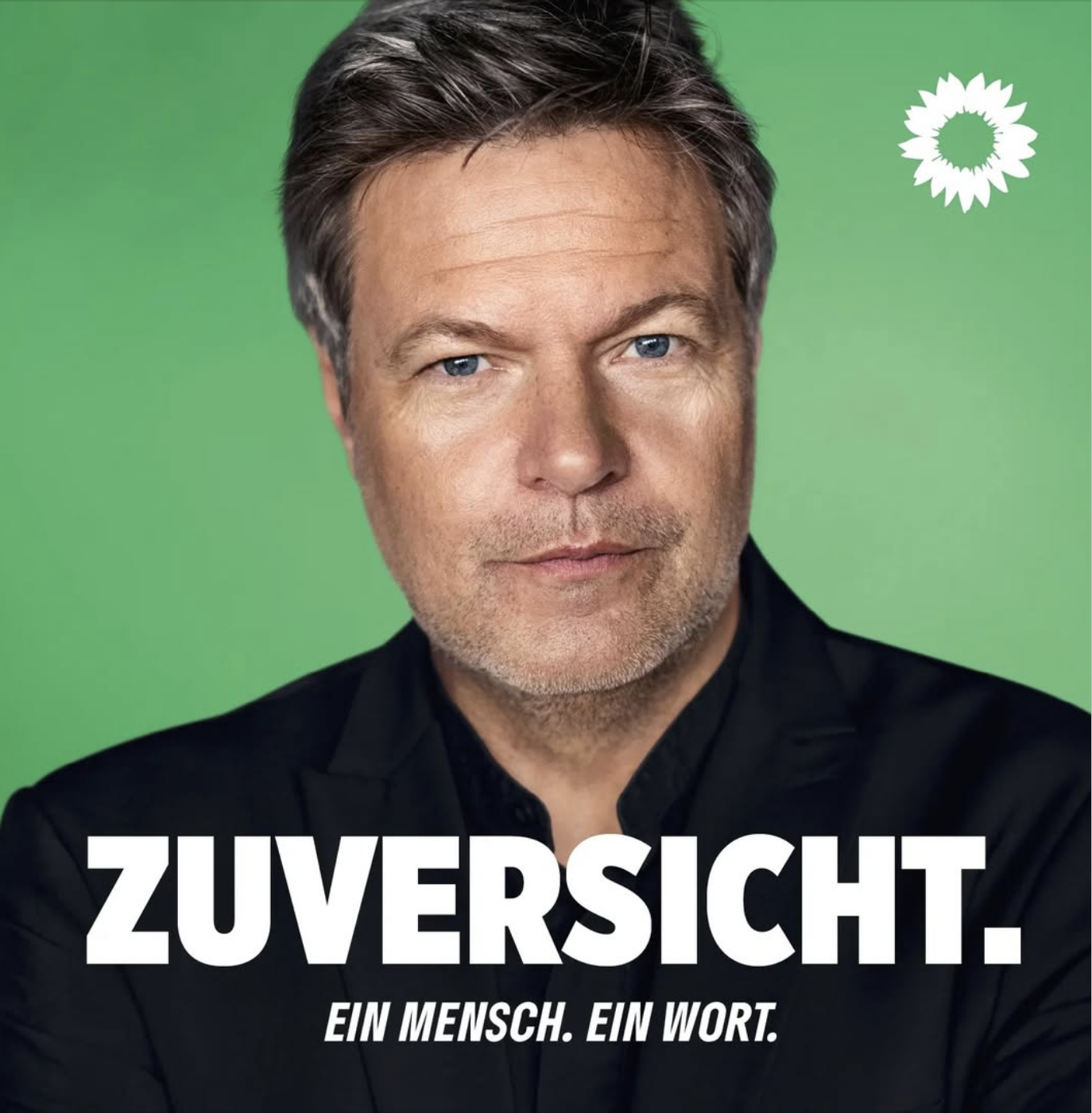

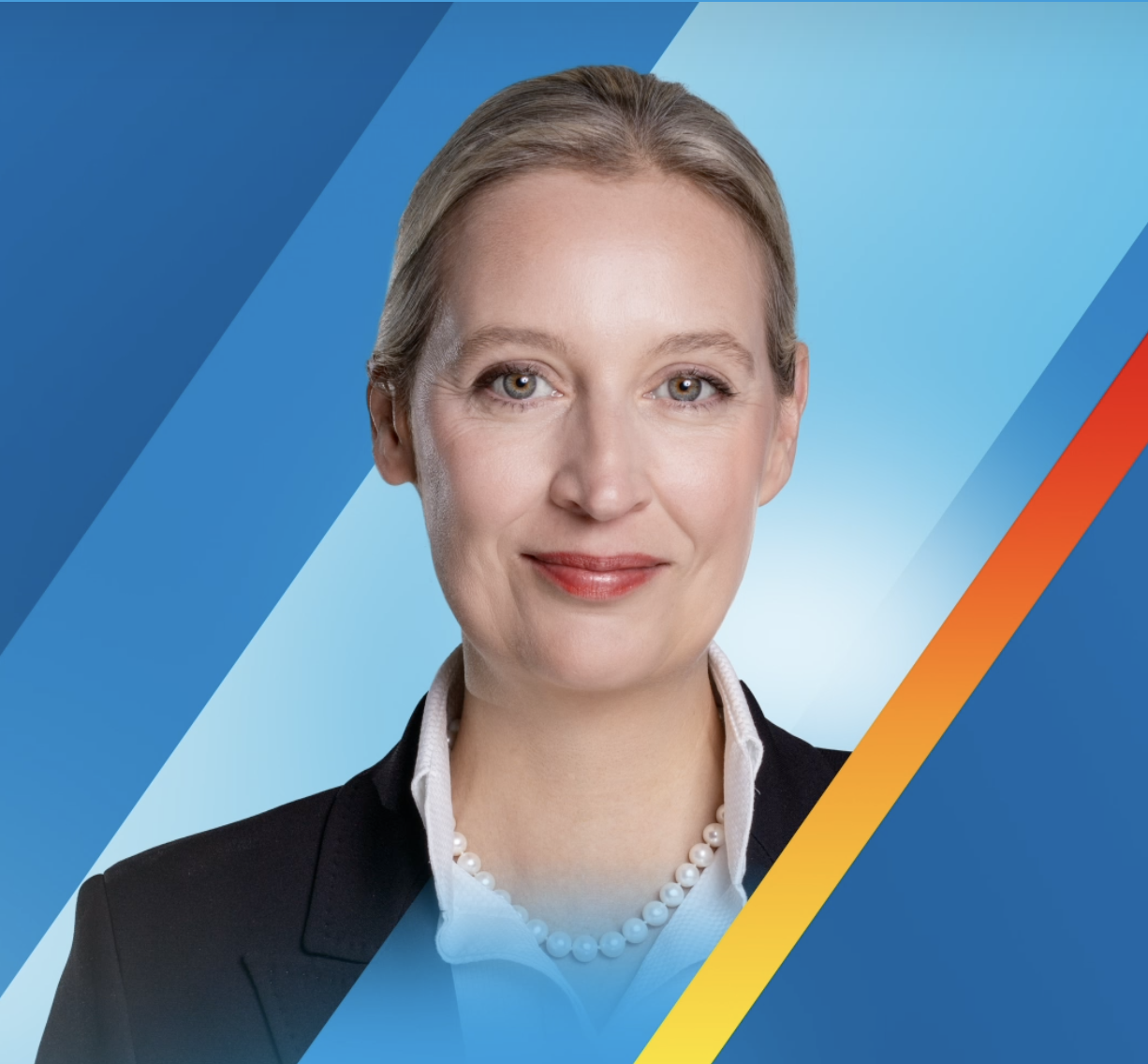
Last Sunday evening, the leaders of the four German political parties most likely to reach the Bundestag threshold of 5% participated in a live-streamed debate. The CDU, SPD, and the Greens see themselves as the bulwark against a new German fascism, while the AfD is known to have Nazi sympathizers among its ranks and has aligned itself with Musk and Trump. While the style of debate was more policy than personality-oriented, with an emphasis on academic tone and argumentation, the issues at stake parallel those from the November 2024 elections: the purchasing power of the average citizen, the handling of migration, and loss of trust in the ruling elite. As in the United States, young people struggle with financial opportunity and now expect a standard of living far lower than that of their parents and grandparents. Germany and the EU are struggling to take care of their citizens while also maintaining a sense of duty to asylum seekers. Many are concerned about significant cultural differences between migrants and Germans.
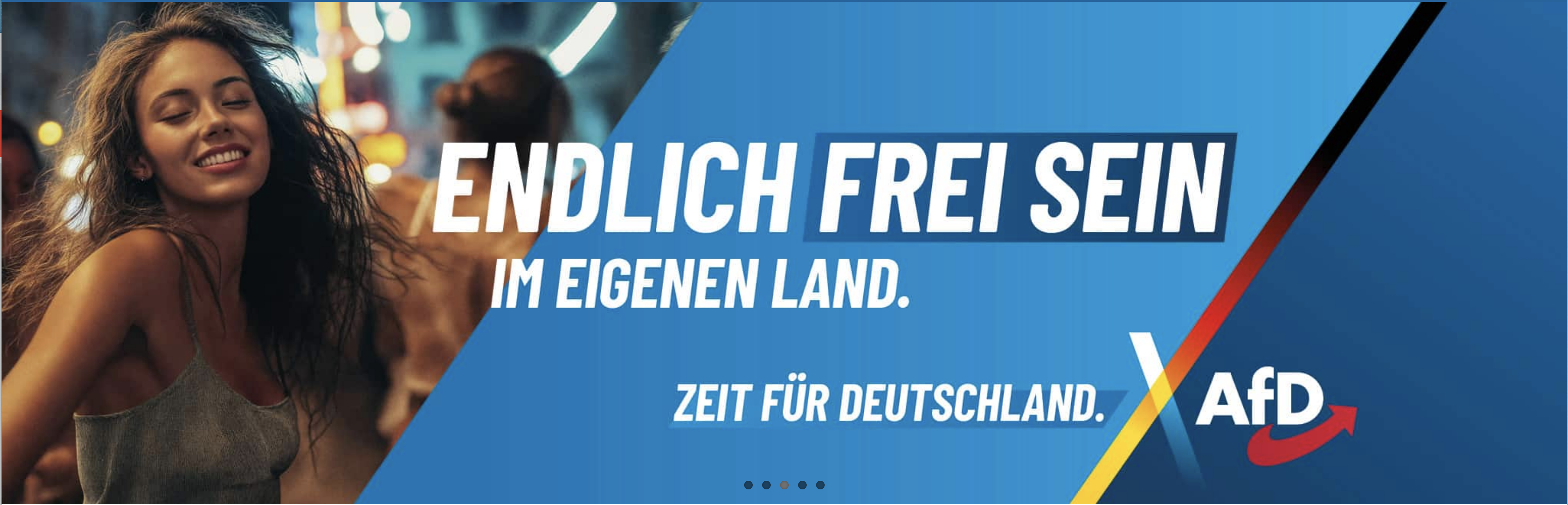
Nevertheless, it is a general sense of government failure that is driving this election. At the end of the debate, one of the moderators asked the leaders of the CDU, SPD, and the Greens directly whether using “old rituals” and political “trench warfare” would succeed in courting the center, saying “[m]any people are concerned that when the democratic center, meaning the CDU, SPD, and the Greens – regardless of what kind of coalition – that in the next legislative period if they don’t solve Germany’s problems, then the next Chancellor will be [Alice Weidel of the Alternative für Deutschland party].” Put even more bluntly, the question was whether these longstanding political parties could find enough economic and ideological common ground to defend Germany against the real enemy from within.
Sound familiar? During the 2016 Republican primary, Donald Trump’s candidacy was not taken seriously. The candidates attacked each other instead of demonstrating solidarity against Trump. In a competition to be furthest away from moderation, Trump looked like he was above it all, even as his rhetoric and tone were in the gutter. Once Trump was in power, Republican concerns aligned with his focus on “winning.” While Republicans fell in line, Democrats pretended like they were falling in love, first with an elderly Joe Biden, then later with Vice President Kamala Harris, who was chosen, not elected, to run against Trump. By November 2024, the Democratic party’s virtue-signaling of their ultra-left agenda left many voters holding their noses as they cast their ballots – regardless of party leanings.
In both countries, voters concerned about balancing their household budgets were and are being left with authoritarian choices. One side claims to be about ensuring democracy through conservative policies, but runs roughshod over constitutional law. The other side offers lofty rhetoric to lift the human spirit, but its embodiment of Rousseau’s “general will” forces a silent majority to be free while aggrandizing power and money.1 Even saving a life has not been spared under the left. In North America, the 988 unified suicide hotline was announced with great fanfare as the public was assured complete confidentiality and safety. Behind the scenes, 988 operators continue to send the police to take callers into custody who are deemed a threat to themselves.2
Evil is the operative word here, whether out of obvious schadenfreude (taking pleasure in someone else’s pain) or schadenfreude masquerading as good intentions. Senator Chris Murphy, Democrat of Connecticut, called the Trump administration “evil” in a recent interview with .3 While Murphy did not provide a personal definition of evil, his conversation with The.Ink gives the impression that he was referring to a situation where trust is eroded and the social contract is crumbling, leaving citizens to vote against their self-interest no matter the candidates. Voters are caught in a classic double-bind.
There is evil in convincing a majority of Americans that campaign promises have been fulfilled while hiding in plain sight that their system of government and protections enshrined in the Constitution and Bill of Rights are being systematically dismantled. There is evil in Democrats posturing over perfect minority representation at the DNC while Elon Musk and his band of incels, who barely display facial hair, dismantle the government from within (Mao’s cultural revolution also relied on the chaos created by high-school and college-aged citizens policing the thoughts and actions of their elders).
Nevertheless, there is an important cultural difference between the USA and Germany. In the United States, political comparisons to Hitler are cheap and the word “fascism” is easily thrown around without a clear definition. When everything is evil, nothing is evil. In Germany, however, everyone knows what it means for Elon Musk to give the Hitler Salute or for J.D. Vance to reference the enemy within. Unlike in the United States, the Germans have a body of laws that restrict public use of Nazi language and imagery. While we Americans may cry foul — or even tyranny — at these restrictions, we should also remember that we also have restrictive speech regulations in place. Here in the US, we censor sex and profanity to protect the public from impropriety, while leaving political discourse open. Perhaps we Americans should reconsider the implications of radical relativism during times of great instability?
Censorship of Nazi language and imagery, of course, hasn’t stopped the AfD. The party is using indirect speech and signaling to harness resentment and promote its 21st-century version of fascism. Nevertheless, the German statutes that separate political evil from regular expression indicate an understanding that not every thought should be expressed in public and become part of the wider discourse. Perhaps Germany’s history and its laws may give politicians the backbone they need to improve their governance in the face of dangerous discontent, as well as motivate them to work with the rest of Europe to keep Putin at bay. The election results this Sunday and the resulting negotiations for a governing coalition may begin to offer an answer to this question.
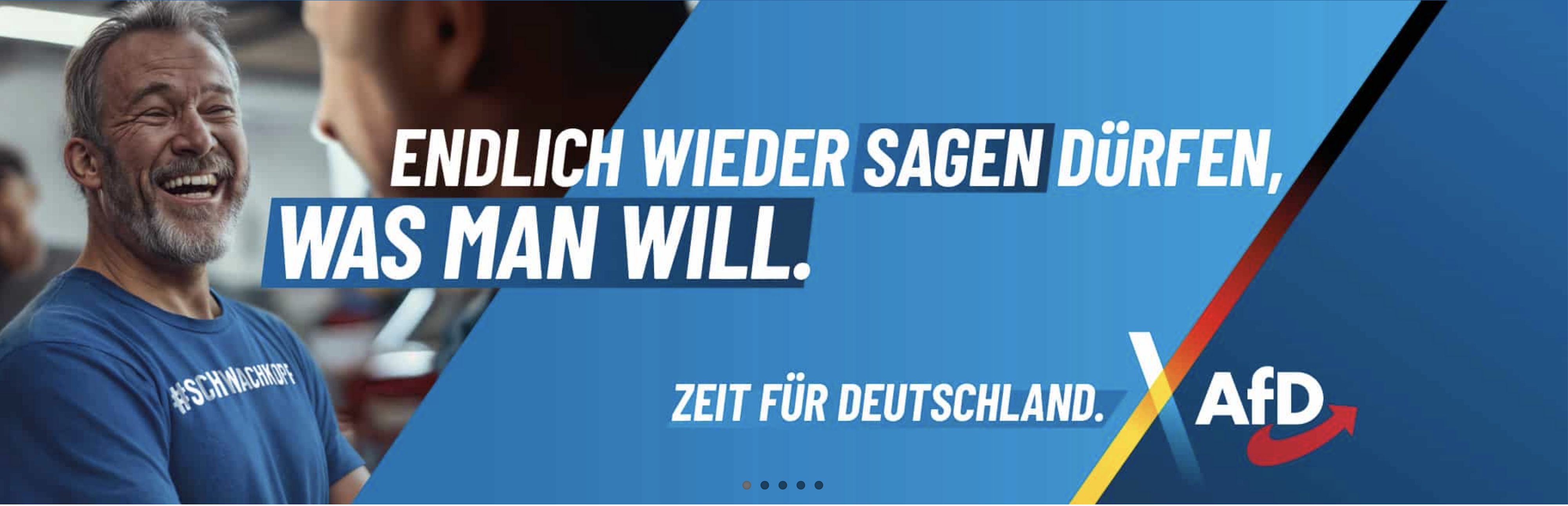
In the end, the takeaway for this week from this German-American comparison is that material stability is the basis for political stability. Think Maslow’s hierarchy of needs. Whether policy or personality is at the heart of a campaign makes little difference when voters know that they have no choice but to vote against their self-interest. Both in Germany and the US, those on the left who claim to defend the rule of law forget that they are in power to serve their constituents, not to promote policies that appear utopian and irrelevant. Even something as noble as accepting asylum seekers into the country needs to be backed up with general economic stability and opportunity. Citizens know when politicians are solidifying power and profiting at their expense, no matter how often their leaders insist that we live in “the best of all possible worlds.”4 This Sunday, the election will be less about whether enough of the German public recognizes evil – the majority probably do – but whether they are so fed up with being pawns as to cast their lot with the AfD.
See Jean-Jacques Rousseau, The Social Contract. ↩
See , Your Consent is Not Required: The Rise in Psychiatric Detentions, Forced Treatment, and Abusive Guardianships (Dallas, TX: BenBella Books, 2023). ↩
Anand Giridharadas, “Senator Chris Murphy warns America may be "months" from "irreversible" destruction of democracy,” Substack Podcast from , February 19, 2025. ↩
See Gottfried Wilhelm Leibniz, Théodicée and Voltaire’s response in Candide. ↩