The Democrats and Left-Wing Authoritarianism — Learning from Germany's Response to Extremism
Finding Patterns in Today's US Politics
There are good comparisons that can be made between the election results in the United States and Germany. In particular, there is an important difference between US and German politicians’ behavior in the face of danger.
German leaders took responsibility in defeat, unlike the Democrats, some of whom still can’t admit how poorly they performed last November. Outgoing Prime Minister Olaf Scholz, in the face of an almost ten-point drop in support for the Social Democrats, said: “The last time around, the election results were better, and I was responsible for that. This time around, the election results were poor, and I am also responsible … .”1 Likewise, Robert Habeck of the Greens offered to step down, saying “I will no longer take a top role in the leadership of the Green Party” (his party, however, encouraged him to stay on, something to be noted for the future).2 It was the AfD, which gained 10 points in the last election, that was the most muted. While their leader, Alice Weidel, noted the accomplishment, other members of the party were far less excited because they were “aiming for the moon,” said one younger member of the party.3
In its continuing combativeness, the Democratic Party is acting a bit like the far-right in Germany, although the AfD is certainly far more brazen in its disappointment and ruthlessness. The Democrats are playing a political game that no longer is in play, while the AfD is trying to upend the democratic order. One is delusional, the other is actively creating delusions. Or is it that simple?
The Democratic Party Can’t Name the Problem, but Friedrich Merz Can
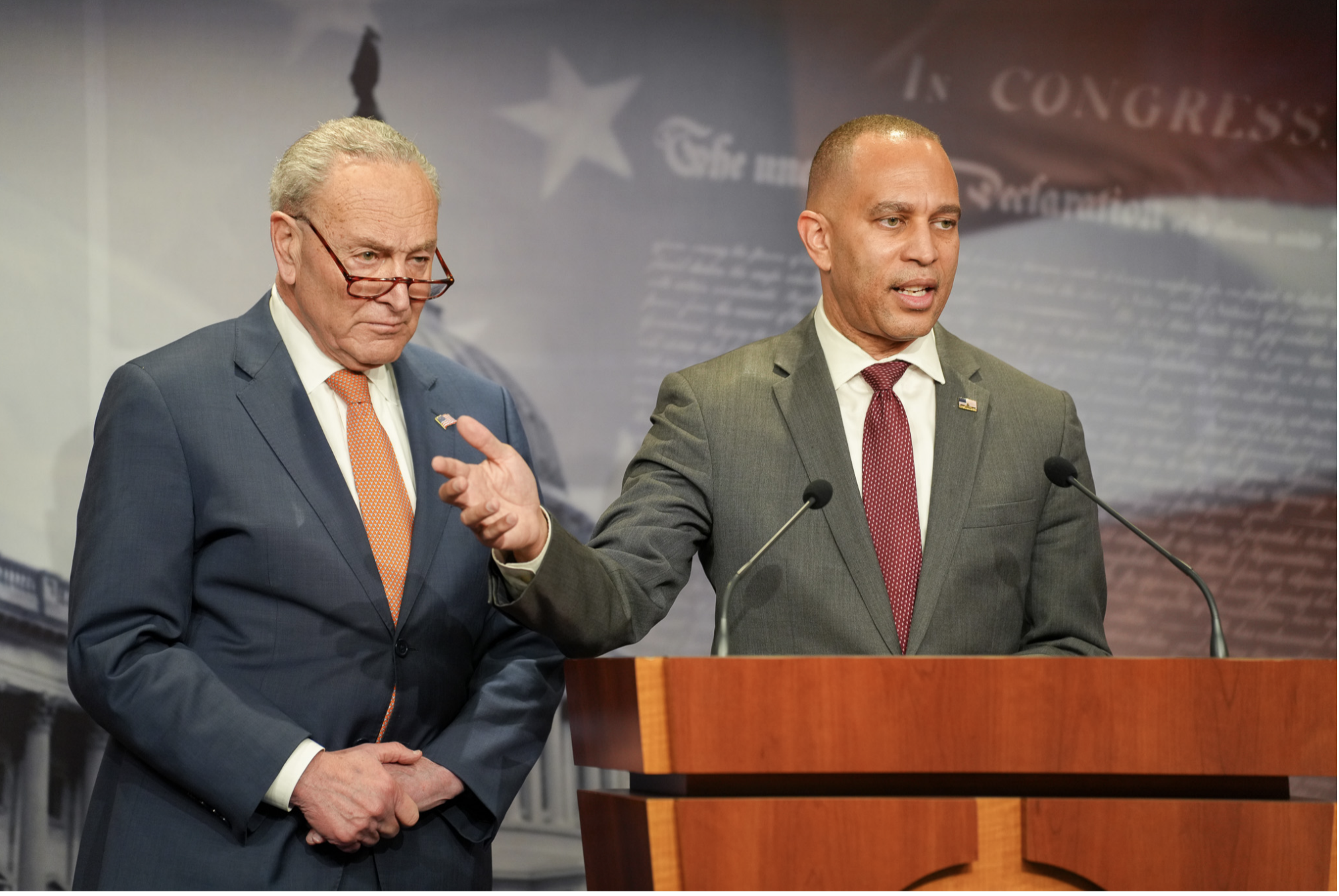
A month after Trump’s obvious strongman power grab, leaders like Hakeem Jeffries and Chuck Schumer are not indicating in their behavior or proposals that they understand that the situation in Washington isn’t politics as usual. They seem to have no comprehension of the destructive nature of Trumpism and that those in power aren’t practicing politics as usual.
While Democrats dither, Friedrich Merz of the Christian Democrats has made his position on the rise of neo-fascism unequivocal and clear: “We won’t work with a party that is xenophobic, that is antisemitic, that keeps right-wing radicals and criminals in its ranks, a party that is flirting with Russia and wants to leave NATO and the European Union.”4
His objections to working with the AfD were concrete and pointed, even in the face of the right-wing party winning 20% of the vote. Merz recognizes, unlike many on the left, that high levels of migration are unpopular, are causing political instability, and are unsustainable in the face of larger bread-and-butter issues across the country. He seems to understand the moment so far and is aiming to provide German and European-wide leadership to provide unity and to bring voters back to the center, something that Nancy Pelosi tried to counsel to no avail during the 2024 campaign.
Why Can’t the Democratic Party Recognize the Moment like Friedrich Merz and the CDU?
Politics as usual for many Democrats has turned out to be as mendacious as Trump, making it extremely difficult to peg the new administration as the true authoritarian enemy for those in the president’s thrall.
The Democratic Party has been using the pretext of constitutional and human rights to consolidate power for some time now. There’s nothing wrong per se with lofty, small-d democratic goals such as diversity, inclusion, and civil rights, but these concerns also 1) need to be applied consistently and fairly and 2) must have a strong grounding in material stability. Personal and financial safety are the backbone of a stable body politic. As Rahm Emanuel, former mayor of Chicago, said on Real Time with Bill Maher, “Safe streets, strong schools, stable finances. Focus on these three things, and you’ll be fine … No more about the locker room. I don’t want to hear another word about the bathroom until you focus on the classroom.”5 Many Democrats aren’t recognizing any of this, although the numbers are slowly growing.
As has emphasized over and over again on Substack and YouTube, the Democrats have a credibility problem in matters of culture and politics. DEI, for example, was neither truthful nor credible in its systematic exclusion of the Jews. This minority population comprises just 2% of the US population, but are disproportionately the victim of hate crimes on and off college campuses.
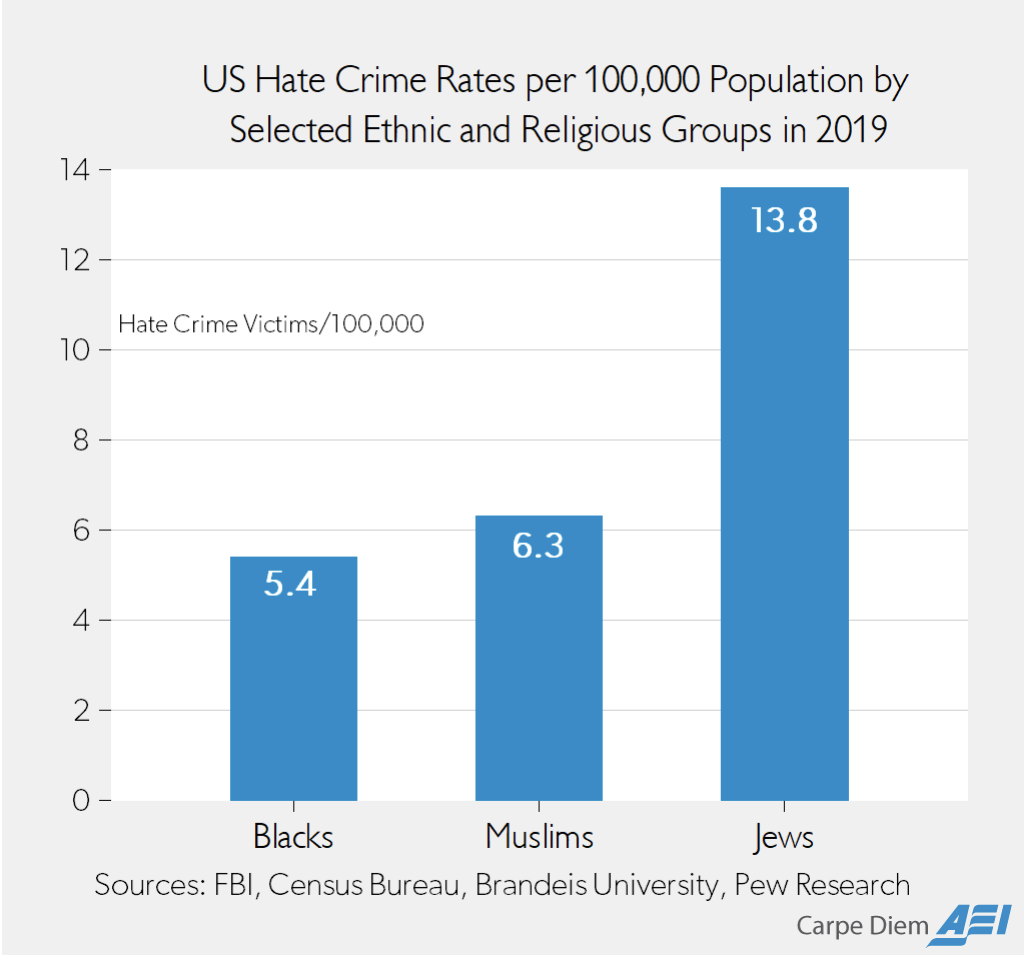
Until a month ago, American Jews were not considered a minority by the US Commerce Department. As a result, they were ineligible for billions of dollars in grants, contracts, and loans, a policy drawing on sinister stereotypes of Jewish wealth and power.6 Democrats didn’t initiate the investigation of college campuses for antisemitism and generally sidestepped the issue. Some on the left went so far as to even dismiss Jewish claims of harassment and violence.7
Likewise, the ability of those with XX and XY bodies to choose to live freely as if they were the opposite sex is a reasonable civil rights discussion, but the Biden administration was surreptitious when it substituted gender identity for sex in federal policy and language without public discussion. The move continues to have enormous political and legal repercussions for more than half the population of the USA. Fair competition in sports and men in women’s prisons are just the tip of the iceberg. Women are physically different from men and carry the burden of pregnancy. Research and public policy need to reflect these physical differences regardless of how individuals formulate their sense of self. On the ground, many job applicants bristled when employers demanded that they state their pronouns for the record.
Moreover, in matters of high politics, Steve Schmidt stated in his recent discussion with that Biden didn’t pursue Trump for sedition when he came into office in 2021 because Biden wanted to be the one who would defeat Trump again. Biden’s inaction, according to Schmidt, was a political maneuver and a vainglorious power grab. Schmidt offers no proof yet, but we do know that Merrick Garland took until the middle of 2023 to indict Trump for election interference and mishandling of classified documents, while the public was increasingly radicalized. From that point on, Trump was able to portray himself as a victim of the federal government because of the time lapse, rather than its enemy. Add culture war issues based on falsehoods, such as DEI and gender ideology, and Trump had a winning campaign handed to him by his opponent.
The Elephant in the Room: Authoritarianism from the Left
Untruths eventually lead to true consequences. While demonstrating authoritarianism from a political party that makes human rights one of its highest goals does make for a difficult argument, this Substack is titled The Elephant in the Room, and I think it’s important to raise this issue for discussion. Here’s my interpretation of how this came about:
First, left-wing, American authoritarianism is less about intention and more about structural results. I have no proof that authoritarianism was the spoken goal of the left, and I have some doubt that many on the left were aware of the problems they were creating.
I do think that privileging ideas over empirical reality and the tactics used to police detractors were creating a dictatorship of thought that was worthy of Mao and the Soviet Union. The left, with the Democratic Party as its head, created confusion and disorientation in the general public by weaponizing the interplay of action and inaction. They ignored issues that should have been addressed directly, such as extraordinary antisemitism on college campuses. They also weaponized action through real threats of ostracism, pushing voters to disbelieve publicly and perhaps even privately, what was right before their eyes. This prolonged interplay between directly aggressive and passive aggressive tactics created great confusion and tension. In the end, the American left escalated the already burgeoning authoritarianism before the 2020 election by forcing voters to deny and betray their own perceptions over and over again.
It should be no surprise then that just under half the population turned to Donald Trump, who has been completely forthcoming about his willingness to lie, cheat, steal, and con. It is also no surprise that Trump’s chief frenemy, Elon Musk, hired people to tear apart the government whose prefrontal cortexes are still developing. Mao upended political and social hierarchies during the Cultural Revolution by empowering young people to preach and police the new order.
Why Germany May Be Stronger in the Face of Radicalization
The incoming chancellor, Friedrich Merz, and the CDU are willing to name the problem, and so far look like they are tackling it head on. While the current German government has been failing miserably, the country has a well-defined conception of unacceptable political activity given their first-hand experience with fascism and its consequences. We Americans generally only read about fascism and not in depth.
One of the ways Germany has attempted to limit the resurgence of fascism is through a basic, common denominator. Germany bans Nazi-associated imagery and speech whose use can grow into a public, politically legitimate conversion. Although the AfD may be getting its message across through coded language, that coding signals a larger understanding that the party’s platform is subversive and wrong.
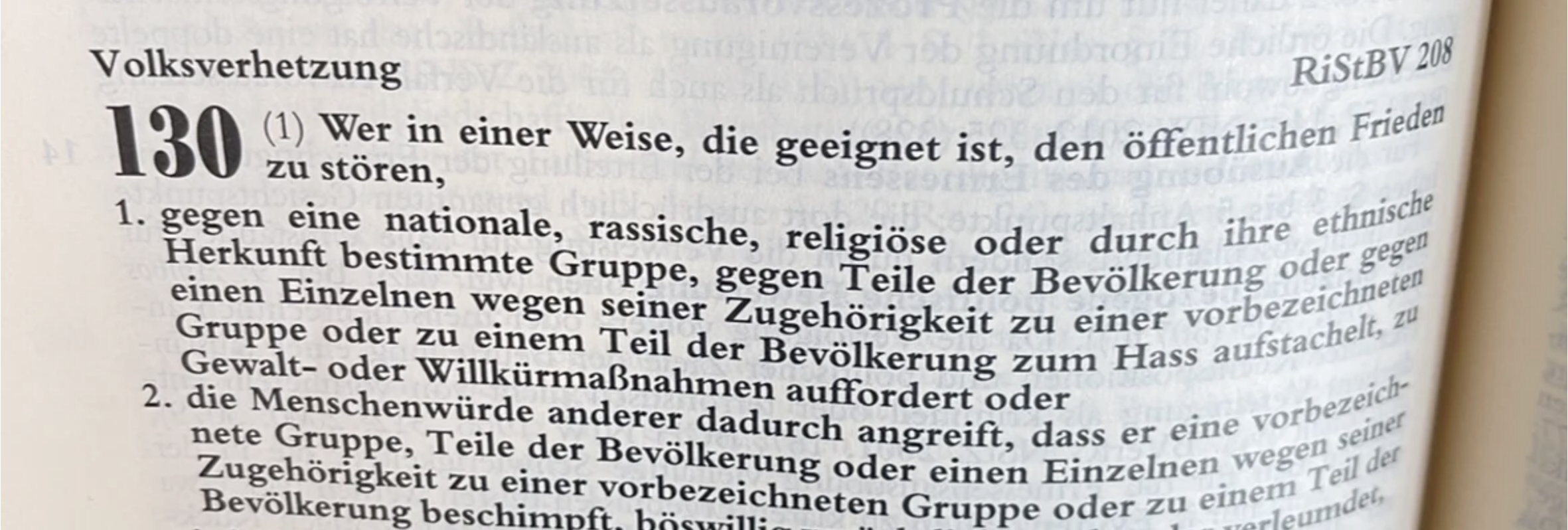
In contrast, we Americans allow just about anything to be said in public, lending a level of legitimacy to destructive beliefs. In times of radicalization, it becomes increasingly harder to distinguish right from wrong and truth from fiction when even the most diametrically opposed ideologies to democracy can be expressed publicly without consequences. This is how the far left has been able to turn constitutional and human rights on its head. This is how the far right can claim to be fighting for democracy while systematically dismantling it.
The 1969 Supreme Court interpretation of free speech in Brandenburg v. Ohio essentially produced a might-makes-right situation. While it was a necessary correction to the broad powers of the 1919 Espionage Act, its radical relativism is a poor way of deciding how policies will be set for our communities, states, and the nation. The decision established that speech could only be restricted if it incited "imminent lawless action," which means that speech is protected unless it directly leads to immediate illegal activity. However, this focus on immediacy means the law doesn’t evaluate the moral or ethical weight of the speech itself, only whether it causes immediate harm. This legal requirement creates a system where the force of an argument outweighs its truth, and the dynamic becomes less about determining right from wrong, and more about which side can be the loudest or most forceful in advancing its views. This expression of radical relativism has been criticized as far back as Plato, who saw this kind of epistemology — where truth is subordinated to the strength of rhetoric — as partly responsible for the political instability of his time.8
Moving into Spring 2025
Over the next couple of months, Friedrich Merz and the CDU will be negotiating a ruling coalition in the Bundestag. I will continue to discuss these developments and make comparisons to the US in terms of strategy and outcomes, but I want to end this essay with where I began: naming a problem.
In the United States right now, we have trouble recognizing things for what they are. Democrats and other public figures are starting to use the word “evil” to describe those in power, but that has been slow in coming. Sometimes strong words and decisiveness are called for, even though in easier times they may be interpreted as emotional instability. Americans may accuse the most passionate Trump critics of “derangement syndrome,” but there is good reason for the fury over the last ten years. Those who reacted most strongly have turned out to be prescient and correct, while those who dismissed the Trump problem as folly — or even worse, used it as entertainment — turned out to be wrong. Unfortunately, like Cassandra who foretold the downfall of Troy, they appeared unhinged for seeing the danger in a world of untruths.
“Olaf Scholz zum Wahlergebnis - Statement Wahlabend,” SPD YouTube, posted February 23, 2025, www.youtube.com/@spdde. ↩
“Habeck will keine Führungsrolle mehr bei den Grünen,” tagesschau, February 24, 2025, https://www.tagesschau.de/eilmeldung/habeck-keine-fuehrungsrolle-100.html. ↩
“Jubel, aber wenig Euphorie,” tagesschau, February 24, 2025, https://www.tagesschau.de/inland/bundestagswahl/bundestagswahl-analyse-afd-100.html. ↩
“Koalition nach Bundestagswahl 2025: Wer regiert Deutschland?” mdr, February 27, 2025, https://www.mdr.de/nachrichten/sachsen-anhalt/fakt-ist-bundestagswahl-regierungsbildung-koalition-102~amp.html. ↩
Rahm Emanuel, Real Time with Bill Maher, February 28, 2025. ↩
“Jewish businesses to be recognized as minority enterprises,” PIX11 News, January 17, 2025. ↩
See Jon Stewart, The Daily Show, February 26, 2024 and Robert Reich, “Protesting against slaughter – as students in the US are doing – isn’t antisemitism,” The Guardian, April 23, 2024, https://www.theguardian.com/commentisfree/2024/apr/23/israel-gaza-campus-protests?CMP=share_btn_url. ↩
See Plato, The Republic and Gorgias. ↩